
Lithium battery charging and protection integrated board with 5V input voltage, 1000mA maximum charging current, 3A overcurrent protection, and 4.2V charging cut-off, for 18650 or similar Li-ion cells, in blue PCB colour


Lithium battery charging and protection integrated board with 5V input voltage, 1000mA maximum charging current, 3A overcurrent protection, and 4.2V charging cut-off, for 18650 or similar Li-ion cells, in blue PCB colour
Lithium Battery Management Board: Integrated 5V Charging with 3A Overcurrent Protection

This all-in-one PCB module consolidates the essential functions needed to safely charge and protect a single lithium-ion or lithium-polymer battery cell. Designed for makers, hobbyists, and repair technicians, it removes the complexity of sourcing and wiring separate charging and protection circuits. The board accepts a standard 5V input—compatible with ubiquitous USB power sources—and delivers a managed output, making it ideal for constructing power banks, revitalising old electronics, or building custom battery-powered devices. Its integrated safeguards are critical for preventing the common failure modes of lithium cells, which can include reduced lifespan from deep discharge or potential hazards from excessive current draw.
Features and Construction
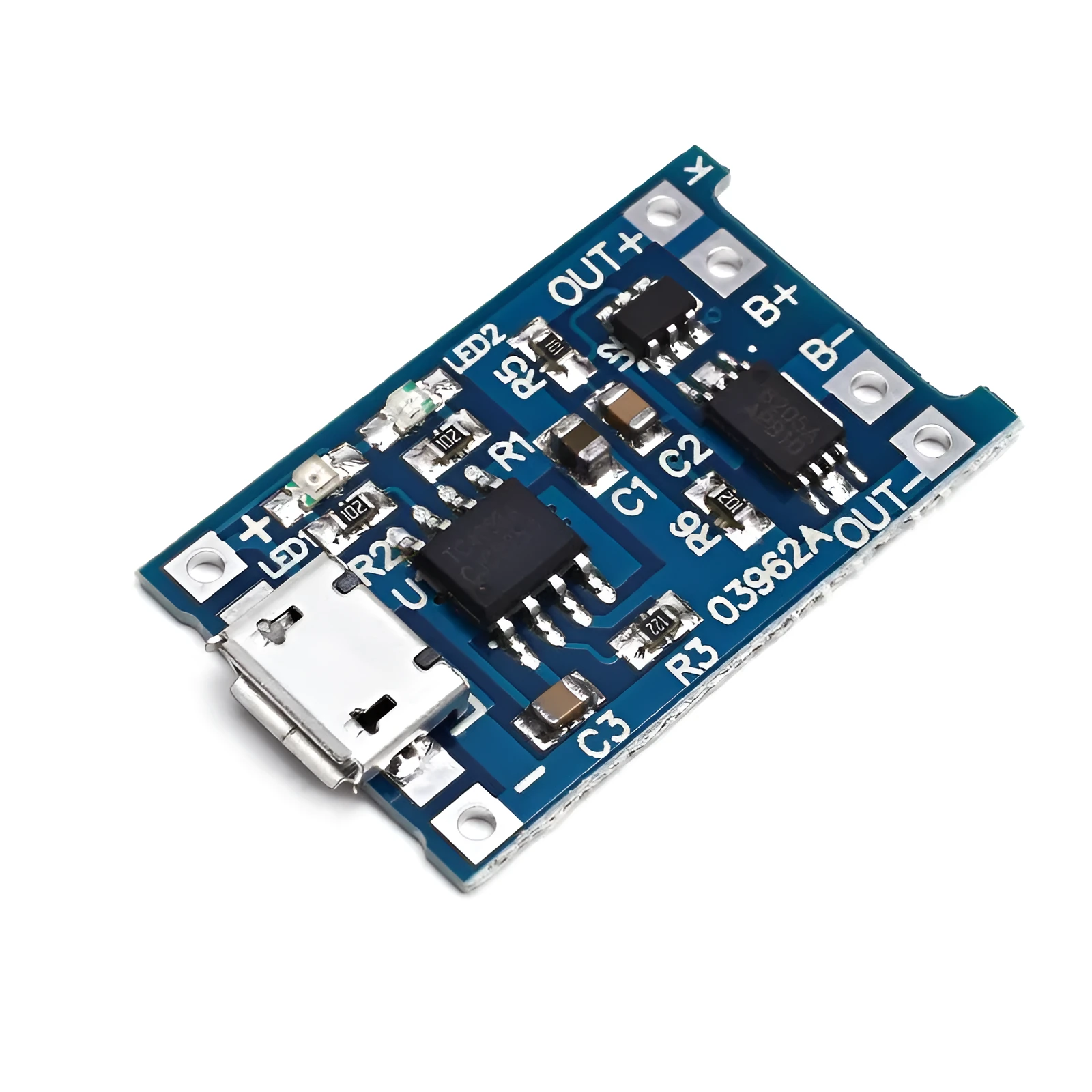
The board's value lies in its integration of multiple discrete functions onto a single, compact footprint. It is built using common surface-mount technology (SMT) on a standard FR4 fibreglass PCB, which provides a durable and heat-resistant base for the electronic components. The blue solder mask offers a distinctive appearance and clear visibility of the circuit traces. This construction is typical for functional electronics modules, prioritising reliable electrical connections and component placement over aesthetic embellishment.
Material and Build
The primary material is the FR4 printed circuit board, a flame-retardant fibreglass composite that serves as the physical and electrical foundation. Electronic components such as the charge management IC, MOSFETs for protection switching, resistors, and capacitors are soldered directly to the board's copper pads. This integrated design ensures a permanent and reliable connection between all parts of the circuit. The components are selected to meet the specified electrical parameters for voltage regulation and current handling.
Size and Practical Fit
With dimensions of precisely 26 millimetres by 17 millimetres (2.6cm x 1.7cm), the board is designed for minimal spatial impact. This compact size allows it to be fitted into the battery compartments of many existing devices or tucked into the casing of new DIY creations like portable speakers, LED lights, or sensor nodes. The small footprint is a key practical advantage, enabling battery management in projects where internal space is at a premium without sacrificing safety features.
Uses and Placement

This module finds application anywhere a single lithium cell (commonly 18650, 14500, or flat LiPo packs) needs reliable power management. It acts as the intelligent heart between a power source and the battery, and between the battery and the device being powered. Correct placement within a project is straightforward: the input side connects to the 5V supply, the output side connects to the device load, and the central terminals connect directly to the battery.
Event or Professional Use
For professional repair work or prototyping, this board serves as a ready-made, tested solution for integrating lithium battery power into electronic designs. It can be used to replace faulty protection circuits in commercial products like cordless tools or consumer electronics, restoring safe operation. In an educational or workshop setting, it provides a hands-on example of battery management principles, allowing users to monitor charging states and protection triggering with a multimeter.
Everyday Home Use
For the DIY enthusiast, this board is the core component for building custom USB power banks from salvaged 18650 cells. It can also be used to add safe charging capabilities to homemade projects like garden lights, portable fans, or emergency power packs. By handling the complex charging algorithm and protection duties, it allows users to focus on the mechanical and aesthetic aspects of their build, confident that the battery is being managed correctly.
Benefits and Buying Value

The primary benefit of this integrated board is risk reduction. Lithium batteries require careful handling to maintain performance and safety; this module provides that care automatically. It also offers convenience, combining two necessary circuits into one pre-assembled unit, saving time and reducing potential wiring errors compared to a discrete component build. The value stems from obtaining a functional, specialised electronic module without the need for advanced circuit design knowledge.
Reuse and Low Maintenance
The board itself is a durable electronic assembly with no moving parts, requiring no maintenance. Its purpose is to extend the usable life and safety of the lithium battery it protects. By preventing damaging deep discharge (cutting off at 2.5V) and disconnecting the load during a short circuit or overload (at 3A), it helps preserve the battery's charge cycles. Once installed, it operates passively, continuously monitoring the battery's condition during both charging and discharging.
Why Choose This Product
Choose this board for its specified combination of a 5V input, 1A charging current, and 3A output protection—a set of parameters suited to many medium-power applications. The clearly stated voltage thresholds (4.2V charge cut-off, 2.5V discharge cut-off) provide transparency about its operation. Its integrated nature is its key differentiator, offering a ready-to-use solution that is more reliable than makeshift wiring and more accessible than designing a custom PCB from scratch for one-off projects.